2026

Peter Scudamore

Born in Herefordshire on June 13, 1958, Peter Scudamore is the son of Michael Scudamore, who won the Grand National on Oxo, trained by Willie Stephenson, in 1959. Nowadays, he is best known as partner and assistant trainer of Lucinda Russell at Arlary House Stables in Milnathort, Kinross but, prior to his retirement from the saddle, on April 7, 1993, he was, in fact, one of the most successful National Hunt jockeys in history.

Scudamore rode his first winner under National Hunt Rules, Rolyat, trained by Toby Balding, at Exeter on August 31, 1978, as a 20-year-old amateur. Later in his career, as a professional, he became stable jockey to Martin Pipe at Pond House in Nicholashayne, Devon where, like his successors Richard Dunwoody and Tony McCoy, he reaped the benefits of his position. All told, Scudamore rode 792 winners for Pipe and was champion jockey eight times between 1981/82 and 1991/92, including seven reasons in a row from 1985/86 onwards. On the first occasion, in 1981/82, he led the jockeys’ championship by 20 winners when breaking his arm in a fall at Southwell in late April. His only realistic rival, John Francome, pledged to stop riding is he drew level, which he did, and the pair were joint champions.

All told, Scudamore rode 1,678 winners, including 221 winners in the 1988/89 season alone, thereby setting records in an era that – it should not be forgotten – came before the advent of summer jump racing, which was not officially introduced in Britain until the year after his retirement. He never won the Cheltenham Gold Cup or the Grand National, but did ride 13 winners at the Cheltenham Festival, including Pearlyman, trained in the Queen Mother Champion Chase in 1987, Celtic Shot, trained by Fred Winter, in the Champion Hurdle in 1988 and Granville Again, trained by Martin Pipe, in the Champion Hurdle, again, in 1993. Elsewhere, he won the Welsh Grand National four times and the Scottish Grand National and Hennessy Gold Cup twice apiece.

Paul Townend

Born in Midleton, County Cork on September 15, 1990, Paul Townend has been attached to the yard of Willie Mullins in Closutton, Muine Bheag, County Carlow since he was 15 years old. He rode his first winner, of any description, The Chip Chopman, trained by Seamus O’Donnell, in an apprentice handicap on the Flat at Limerick on 22 June, 2007. Fast forward to 2010/11 – the season in which he rode his Cheltenham Festival winner, What A Charm, trained by Arthur Moore, in the Fred Winter Juvenile Handicap Hurdle – and Townend was crowned champion jump jockey in Ireland for the first time.

Following the retirement of Ruby Walsh on May 1, 2019, Townend became stable jockey and currently has seven Irish jump jockeys’ titles to his name, having won again in 2018/19, 2019/20, 2020/21, 2021/22, 2022/23 and 2024/2025. At the Cheltenham Festival, where he has won the leading jockey award six times since 2020, he already has the distinction of being the third most-successful jockey in history, his tally of 42 winners having been bettered only by Ruby Walsh, with 59 winners, and Barry Geraghty, with 43.

Indeed, Townend is also the most successful jockey in the history of the Cheltenham Gold Cup, having recorded his fifth win in the ‘Blue Riband’ event on Gaelic Warrior in 2026, after Al Boum Photo (2019 and 2020) and Galopin Des Champs (2023 and 2024). Of the other ‘feature’ races at the Cheltenham Festival, he has won the Queen Mother Champion Chase three times, the Champion Hurdle and the Ryanair Chase twice apiece and the Stayers’ Hurdle once.

Away from the Festival, Townend is probably best known for his association with I Am Maximus, owned by J.P. McManus, on whom he won the Grand National in both 2024 and 2026 and finished a close second behind stable companion Nick Rockett in 2025. After his second victory, he said of I A Maximus, “He’d gallop to the end of the world for you and I’m privileged to have anything to do with him. What a clever horse.”

Mark Walsh

Born in Clare, County Kildare on March 23, 1986, Mark Walsh joined Curragh trainer as a 15-year-old and rode his first winner, Shrug, trained by Marcus Callaghan, in a handicap hurdle at Punchestown on September 29, 2002. He rode his first Grade 1 winner, Defy Logic, trained by Paul Nolan, in a novice chase at Leopardstown on December 26, 2013.

The following season, 2014/15, Walsh was leading the jockeys’ title race in Ireland when breaking his arm in a fall from Winter Breeze, trained by Michael Winters, in a maiden hurdle at Thurles on February 26, 2015. Consequently, he missed the Cheltenham Festival and a crucial part of the season, effectively scuppering his title chances. He did, however, achieve a career-best total of 75 winners, from 396 rides at a strike rate of 19%.

Following the retirement of Barry Geraghty on July 4, 2020, Walsh served as first-choice jockey to leading owner John Patrick ‘J.P.’ McManus on Irish soil and the pair enjoyed numerous high-profile successes. Indeed, McManus has provided him with 11 of his 16 Cheltenham Festival winners to date, including Espoir D’Allen, trained by Gavin Cromwell, in the Champion Hurdle in 2019, Sire Du Berlais, trained by Gordon Elliott, in the Stayers’ Hurdle in 2023 and Inothewayurthinkin, also trained by Cromwell, in the Cheltenham Gold Cup in 2025.

Of the latter success, Walsh said, “I’m dancing inside. I can’t believe it.” His tenure as retained jockey to McManus came to an end at the end of the 2025/26 season, with Harry Cobden taking over on both sides of the Irish Sea. However, Walsh signed off in style, winning the Ballymore Champion Four Year Old Hurdle at Punchestown on Saratoga, trained by Padraig Roche, son of Christy, to give the local trainer his first Grade 1 winner. He had previously won the Fred Winter Juvenile Handicap Hurdle at the Cheltenham Festival on the same horse and, of the current crop of jockeys, only Paul Townend and Nico de Boinville have ridden more winners at the March showpiece meeting than him.

John Francome

Born in Swindon, Wiltshire on December 13, 1952, to a family with no connection to horse racing, John Francome was already an accomplished showjumper – he had, in fact, won the Young Riders’ Championship of Great Britain at Hickstead – before joining legendary National Hunt trainer Fred Winter, at Uplands Stables in Upper Lambourn, Berkshire, as a 16-year-old. He rode a winner at the first attempt, on Multigrey, owned and trained by Godfrey Burr, at Worcester on December 2, 1970.

However, after a year with Winter, as fourth-choice jockey behind Paul Kelleway, Richard Pitman and Vic Soane and struggling with his weight, Francome was on the verge of giving up. Nevertheless, he persevered and, due in large part to his association with Osbaldeston, on whom he would eventually win 17 races, embarked on a career that would see him become champion jockey seven times between 1975/76 and 1984/85. In 1981/82, he shared the title with Peter Scudamore, who was sidelined with a broken arm in the closing stages of the season; Francome sportingly stopped riding when he drew level with Scudamore, making them joint champions.

Francome reached the landmark of 1,000 career winners on Observe, trained by Winter, at Worcester in February 1983 and the following May beat the previous record for National Hunt winners, 1,035, set by Stan Mellor, on Don’t Touch at Fontwell. He rode his last winner, Gambler’s Cup, at Huntingdon in April 1985 and retired the following daym with 1,137 British winners to his name, after becoming ‘hung up’ by a twisted stirrup leather when his final mount, The Reject, fell at Chepstow.

At the Cheltenham Festival, Francome rode five winners, including Midnight Court, trained by Winter, in the Cheltenham Gold Cup in 1978, Sea Pigeon, trained by Peter Easterby, in the Champion Hurdle and Derring Rose, also trained by Winter, in the Stayers’ Hurdle, both in 1981.

He later told the ‘Racing Post’, “Most people think the winning post at Cheltenham is at the bottom of the hill. Once you realise it isn’t, life’s a lot easier.” Away from the Festival, Francome also won the King George VI Chase at Kempton twice, on Wayward Lad, trained by Michael Dickinson, in 1982 and Burrough Hill Lad, trained by Jenny Pitman, in 1984.

Notable entries for the Group 1s at Royal Ascot

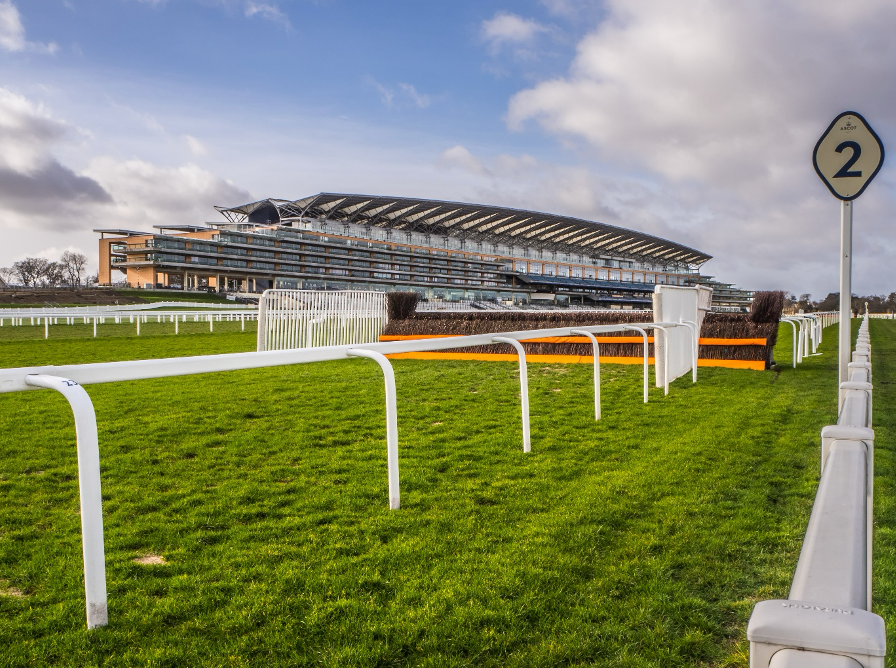
Royal Ascot is the pinnacle of the Flat season, and this year’s renewal is shaping up to be one of the most compelling in recent memory. With high-class performers from Europe, Australia and beyond targeting the prestigious Group 1s, punters looking for a horse racing bet will have plenty to weigh up across the five days at Berkshire. Here is a look at some of the most notable entries for the week’s top prizes.


Bow Echo: St James’ Palace Stakes

The excitement around Bow Echo following his impressive 2000 Guineas victory has been palpable, and connections are set to keep him at a mile with a tilt at the St James’ Palace Stakes on day one. Trained by George Boughey and ridden by the brilliant young talent Billy Loughnane, the partnership has captured plenty of attention this season, and a Royal Ascot victory would represent another landmark moment for both trainer and jockey. He arrives at the meeting as the one to beat.


Daryz: Prince of Wales’s Stakes

The French raider Daryz offers a fascinating storyline heading into the Prince of Wales’s Stakes. He disappointed in the Juddmonte International Stakes at York last year, but an encouraging return to form on home soil tells a very different story. Back at his best, he beat Minnie Hawk in the Prix de l’Arc de Triomphe before producing another eye-catching effort in the Prix Ganay. If that form translates to Ascot, he could prove a thorny opponent for the home contingent.


True Love: Coronation Stakes

Aidan O’Brien’s True Love was breathtaking in the 1000 Guineas, landing her trainer a first win in the Classic since 2021. The natural next step could be the Coronation Stakes, where she would face her own sex again over the same mile trip. O’Brien rarely travels to Ascot without plenty of firepower, and stablemates Precise and Diamond Necklace are also in contention for the race, meaning Ballydoyle could dominate the market. It shapes up as a potentially fascinating renewal with strong Irish representation at the top end.


Joliestar: Queen Elizabeth II Jubilee Stakes

Australian raiders have a proud history at the Royal meeting, and Joliestar looks set to continue that tradition in the Queen Elizabeth II Jubilee Stakes. The Chris Waller-trained mare has been in scintillating form at Randwick this season, winning three races in succession, including back-to-back Group 1s.


She heads the market for the six-furlong showpiece, and if you are shopping around for Ascot odds on one of the most intriguing cross-hemisphere matchups of the week, her price could be well worth monitoring as the meeting approaches. The anticipation around her arrival adds real star quality to the sprint division.


Scandinavia: Ascot Gold Cup

The staying division has a fascinating dynamic this year, with St Leger winner Scandinavia set to challenge reigning champion Trawlerman in the Ascot Gold Cup. O’Brien’s stayer is the favourite heading into the two-and-a-half-mile feature, and his seasonal reappearance at Navan in the Listed Vintage Crop Stakes was encouraging: he won comfortably enough and gave the impression he would come on for the run. Trawlerman will not surrender his crown without a fight, but Scandinavia’s classic form and improving profile make this a Gold Cup with genuine intrigue at the head of the market.


Royal Ascot 2025 has all the ingredients for a memorable week, and the Group 1 programme looks particularly strong across all five days.

Ryan Moore

Born in Brighton, East Sussex on September 18, 1983, Ryan Moore is the eldest son of trainer Gary Moore who, since 2024 has held a joint-licence with his youngest son, Josh, at Cisswood Racing Stables in Lower Beeding, West Sussex. He rode his first winner, of any description, Mersey Beat, trained by his father, in an amateur riders’ handicap hurdle at Towcester on May 15, 2000 and his first Flat winner, No Extras, in an amateur riders’ handicap at Newmarket on June 3, 2000.

Moore subsequently became apprenticed to Richard Hannon Snr., in East Everleigh, Wiltshire and, in 2003, became champion apprentice, riding out his claim on his way to a career-best 59 winners. He rode over 100 winners in Britain for the first time in 2004 and went on to repeat the feat in 13 of the next 14 seasons, peaking with 194 winners, from 899 rides at a strike rate of 22%, in 2013.

Moore became champion jockey for the first time in 2006, with 180 winners, including his first Group 1 winner, Notnowcato, trained by Sir Michael Stoute, in the Juddmonte International Stakes at York on August 22, 2006. He may well have defended his title in 2007, but for three months on the sidelines with a broken arm. Nevertheless, he chalked up four more Group 1 wins, including an enterprising, solo effort on the stands’ side on Notnowcato in the Coral-Eclipse at Sandown, and eventually finished third in the jockeys’ championship behind joint-winners Seb Sanders and Jamie Spencer. As stable jockey to Stoute, Moore was champion jockey again in both 2008 and 2009 and, in 2010, completed the Oaks/Derby double on Snow Fairy, trained by Ed Dunlop, and Workforce, trained by Stoute.

Nowadays first choice jockey for Aidan O’Brien in Ballydoyle, County Tipperary, Moore reached the landmark of 2,000 winners in Britain on Billesdon Brook, trained by Richard Hannon Jnr., in a fillies’ novice stakes race at Kempton on July 5, 2017. At the time of writing, he has 18 British Classic winners to his name, the most recent of which was Minnie Hauk, trained by O’Brien, in the Oaks in 2025.